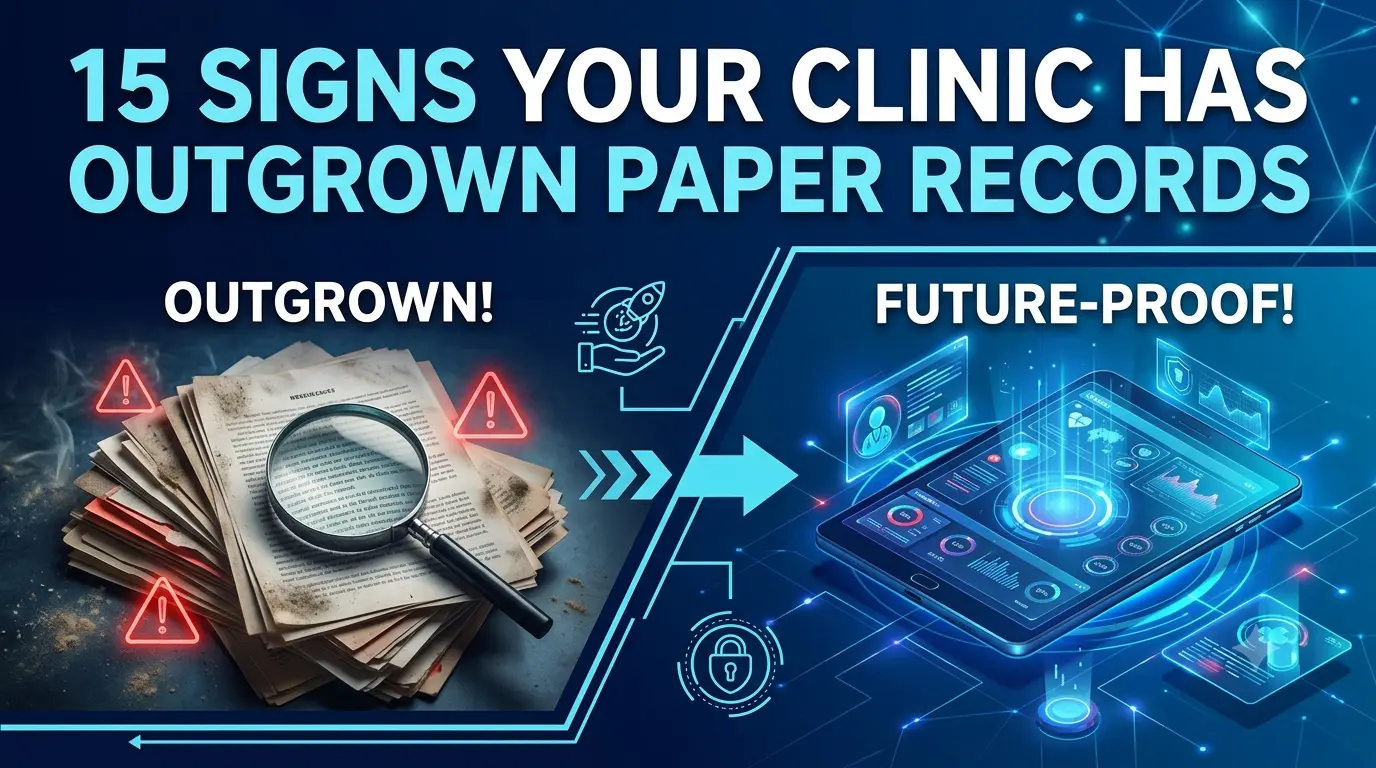
15 Signs Your Clinic Has Outgrown Paper Records

ProKliniK Editorial Team
Editorial Team • June 30, 2026
Introduction: The Heavy Burden of Paper-Based Healthcare
For decades, paper records were the gold standard for medical documentation. Every patient chart, prescription, lab report, and financial invoice lived inside a physical folder, neatly alphabetized on a shelf. However, as medical practices scale and patient expectations pivot toward immediate, digital-first experiences, the limitations of paper have transformed from minor inconveniences into major operational liabilities.
Running a modern medical facility with physical charts is like operating a business with a typewriter—it limits speed, blocks collaboration, and introduces significant margins for error. If your medical team spends more time filing, searching, and deciphering handwriting than they do focusing on clinical outcomes, your system is broken. Here are the 15 definitive signs that your clinic has officially outgrown paper records and is ready for a digital upgrade.
1. Misplaced or Lost Patient Files
The Ghost Chart Phenomenon
If your reception staff regularly plays detective to locate a patient’s medical file, you are losing valuable time and compromising care. Paper files are easily misfiled under the wrong letter, left on a doctor's desk, or accidentally thrown away. When a file goes missing, the clinic halts, consultations are delayed, and patient trust drops significantly.
2. Physical Storage Space is Running Out
Cluttered Clinics
Are your cabinets overflowing? Is valuable clinic real estate being utilized to store thousands of historical folders instead of serving as a new examination room or a comfortable waiting area? Buying more shelves and filing cabinets is a temporary patch for a permanent problem. Moving to a cloud-based EMR reclaims your physical space instantly.
3. Long Waiting Times for Retrieving Records
Friction at the Front Desk
When a patient arrives, the front desk should greet them warmly, not spend 5 to 10 minutes digging through a backroom filing cabinet to retrieve their medical history. Long retrieval times lead to crowded waiting areas, backed-up schedules, and stressed administrative staff who are constantly playing catch-up.
4. Illegible Handwriting Leading to Medical Errors
The Risk of Misinterpretation
Poor medical handwriting is more than a stereotype; it is a clinical risk. When prescriptions, dosages, or vital diagnoses are handwritten, assistants, pharmacists, and other specialists can easily misinterpret them. Typewritten, structured notes within a digital clinic system eliminate this risk entirely, ensuring patient safety.
5. Inefficient Collaboration Among Doctors
The Disconnected Care Team
In a multi-specialty clinic, a patient may need to see a general practitioner, a dermatologist, and a physical therapist. Passing a single physical file around means only one professional can view or update it at a time. A digital system allows multiple authorized doctors to securely view the same record simultaneously, streamlining the care process.
6. Skyrocketing Costs of Paper, Printing, and Stationery
The Hidden Overhead
Take a look at your monthly expenses. The cost of medical-grade folders, custom printing, printer ink, prescription pads, labels, and physical storage boxes adds up to a massive annual budget. Going paperless with a digital solution reduces these operational overhead costs to nearly zero.
7. Inability to Access Records Remotely
The Tethered Physician
If an urgent medical question arises while a doctor is off-duty, or if they need to review tomorrow’s complex cases from home, paper files force them to physically stay at or drive back to the clinic. Cloud-based software empowers practitioners to securely log in from their tablets or laptops anywhere, anytime.
8. Frequent Scheduling and Appointment Conflicts
The Chaos of Paper Logs
Relying on a paper appointment book or a calendar ledger leads to double-bookings, missed cancellations, and manual scratching-out that looks messy and unorganized. When your scheduling is completely digital, it cross-references doctor availability, room occupancy, and equipment in real-time, preventing scheduling conflicts.
9. Difficulty Tracking Patient Historical Trends
Blind Spots in Long-Term Treatment
How has a patient’s blood pressure changed over the past three years? What was their reaction to a specific drug dosage 18 months ago? Finding this information in a paper chart requires flipping through hundreds of loose papers. An EMR system charts these trends instantly with visual, actionable graphs.
10. Extreme Vulnerability to Physical Disasters
No Backup Plan
A simple plumbing leak, a fire, or an office break-in can permanently destroy your clinic's entire history of patient records. There is no 'Undo' button for burnt paper. Digital clinic management systems securely encrypt and back up all data to the cloud automatically, ensuring your clinic can recover from any physical disaster.
11. Disconnected Billing and Financial Leakage
Unbilled Services
When clinical notes are recorded on paper and billing is handled manually, services easily slip through the cracks. A doctor might perform a minor procedure or provide an extra material that never gets written down on the invoice bill, leading to significant revenue leakage. Integrated systems tie clinical actions directly to invoicing.
12. Patient Frustration with Repetitive Intake Forms
Poor First Impressions
Patients dread arriving 20 minutes early just to sit with a clipboard and write down their name, phone number, and medical history on three different pieces of paper. Modern patients expect digital registration links via SMS or email before they arrive, allowing them to breeze through the check-in process.
13. Lack of Real-Time Business Analytics
Flying Blind Financially
Can you instantly tell which specialty generated the most revenue last month? Do you know your exact patient retention or cancellation rate? Compiling this from paper logs takes weeks of manual spreadsheet data entry. Digital clinic management dashboards give you these operational metrics in one click.
14. Compliance and Audit Trail Nightmares
Who Viewed the File?
With paper folders, anyone walking past the reception desk can potentially look inside a file, and there is no way to know who opened it. Modern healthcare regulations demand strict audit trails. Digital systems log every single view, edit, and print command by user, keeping your clinic perfectly compliant.
15. Slow Referral and Pharmacy Workflows
The Bottleneck of Faxing and Scanning
Referring a patient to another specialist or sending a prescription to a pharmacy via paper, faxing, or manual scanning creates massive bottlenecks. It slows down the patient's treatment cycle. Digital clinic eco-systems allow direct, instant data export and electronic communication, accelerating the entire care delivery chain.
The Ultimate Cost: Paper vs. Cloud EMR
To help visualize the operational transition your clinic will experience, let us compare the day-to-day realities of both methods: | Operational Aspect | Paper-Based Practices | Cloud Clinic Management System | | :--- | :--- | :--- | | **Retrieval Speed** | 5 to 15 minutes of manual searching | Instant search by name, phone, or ID | | **Data Security** | Locked cabinets (vulnerable to physical breaches) | Cloud encryption, role-based access controls | | **Space Management** | Rooms dedicated to physical document archive | Zero physical footprint; cloud-hosted database | | **Financial Auditing** | Manual reconciliation of receipts and paper bills | Automatic daily, monthly, and yearly revenue tracking | | **Patient Perception** | Dated, unorganized, slow-moving environment | Modern, highly professional, digital-first practice |
Conclusion: Time to Leave the Paperweight Behind
Recognizing these signs in your daily clinic environment is the first step toward building a highly efficient, profitable, and stress-free medical practice. Continuing to push paper around is no longer sustainable in the competitive healthcare landscape of 2026. Transitioning your clinic to a cloud-based solution like ProKliniK solves these fifteen major pain points simultaneously, allowing your medical staff to ditch the paperwork and return to what they do best: delivering world-class healthcare.
Related Articles

Why Every Modern Clinic Needs a Clinic Management System in 2026
Running a successful clinic in 2026 requires more than excellent medical care. Patients expect online booking, shorter waiting times, digital communication, and efficient service. This guide explains how a clinic management system helps improve operational efficiency, increase revenue, reduce administrative workload, and deliver a better patient experience while preparing clinics for future growth.
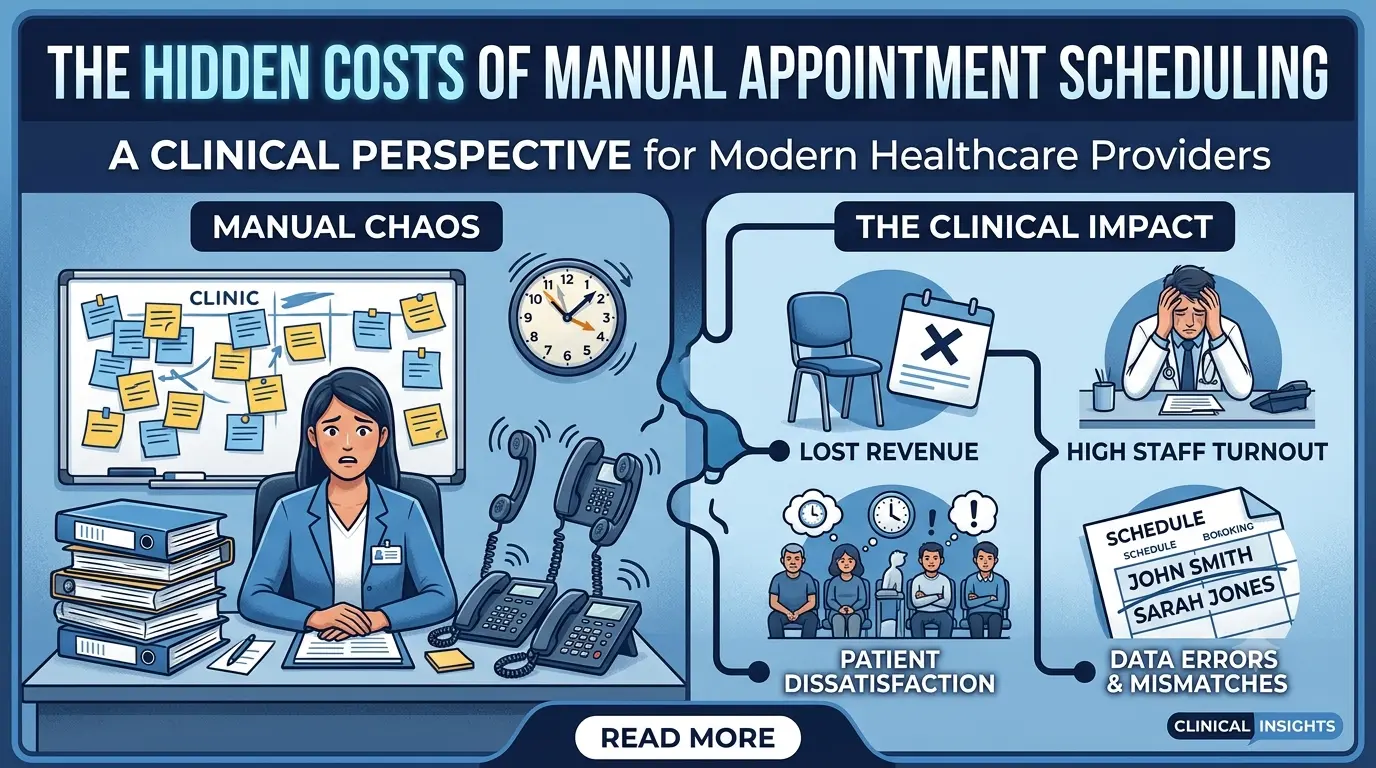
The Hidden Costs of Manual Appointment Scheduling: A Clinical Perspective for Modern Healthcare Providers
In the high-stakes environment of modern healthcare, time is a critical resource. Manual scheduling leads to lost revenue from no-shows, double-bookings, and administrative inefficiencies. Proklinik-one demonstrates how automated systems transform chaotic coordination into a streamlined engine for patient care and revenue growth.
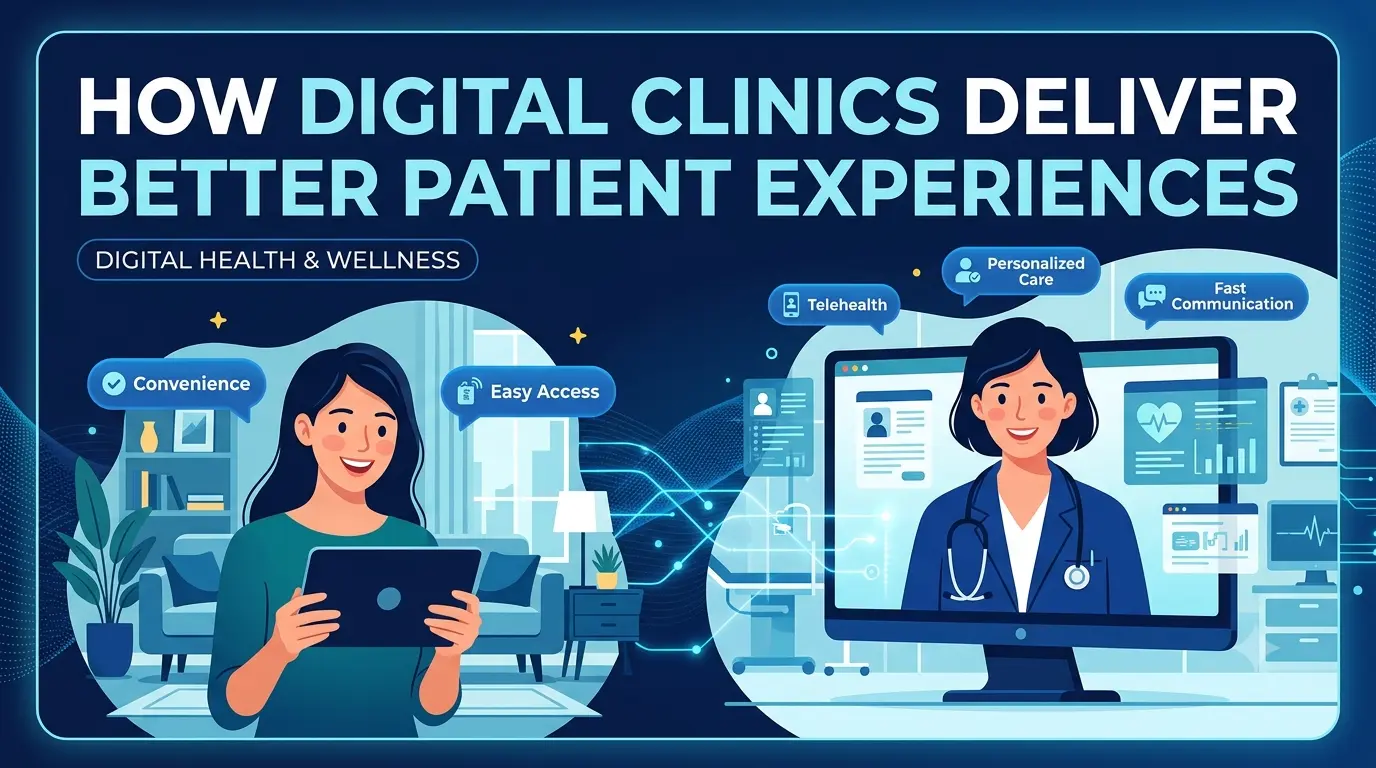
How Digital Clinics Deliver Better Patient Experiences
In the modern healthcare landscape, patient experience (PX) is a critical differentiator. Digital clinics leverage technology to reduce wait times, streamline communication, and provide seamless access to care. This article explores how Proklinik-one empowers clinics to transform digital infrastructure into superior patient journeys.